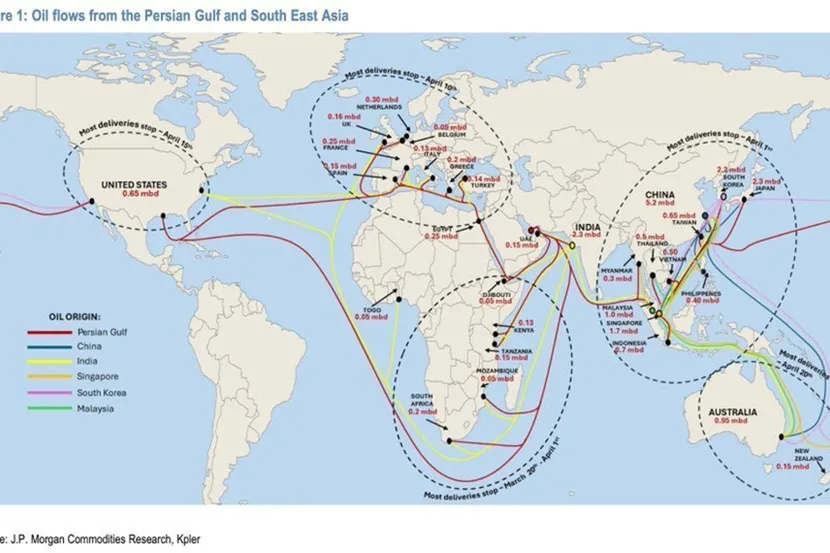
Global energy markets are facing a potential crisis, as analysts from JP Morgan warn of a major fuel shortage that could impact multiple continents in the coming weeks.
Shortages spreading from East to West
According to projections, fuel shortages are expected to spread gradually from Asia and Africa toward Europe and North America.
CITAJTE I OVO:


Europe could begin to experience serious disruptions as early as April 10, while the United States may be affected shortly after.
Key cause: disruption of critical oil routes
The primary driver behind the looming crisis is a disruption in global oil supply routes, particularly through the strategically vital Strait of Hormuz.
This key shipping lane handles a significant portion of the world’s oil supply, and any blockage or slowdown can trigger widespread shortages.
JP Morgan just published a countdown for when each continent runs out of fuel:
🇨🇳 Asia: April 1st
🇪🇺 Europe: April 10th
🇺🇸 North America: April 15th
🇦🇺 Australia: April 20th pic.twitter.com/Q6uCVgdxNz— Rand Group (@cryptorand) March 31, 2026
A “ticking time bomb” for global energy
Analysts describe the situation as a “ticking time bomb”, as the real impact unfolds gradually when reserves begin to run low.
Some regions have already started implementing emergency measures, including:
- fuel consumption limits
- reduced industrial activity
- contingency plans for supply shortages
What it means for Europe
Although Europe has more diversified energy sources compared to some regions, experts warn it will not be immune.
Possible consequences include:
- sharp fuel price increases
- localized shortages
- increased competition for available supply
Global economic impact
A widespread fuel shortage could have severe consequences for the global economy:
- rising inflation
- disruptions in transportation and logistics
- reduced industrial output
- potential economic slowdown or recession
Even if supply routes are restored quickly, analysts caution that full recovery could take months.