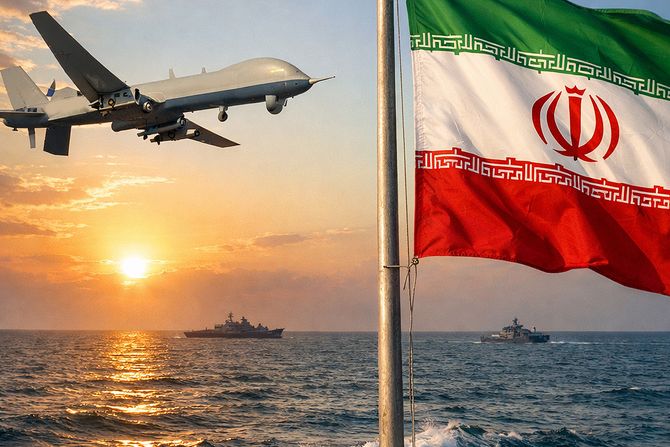
Iran Deploys Mines in Strait of Hormuz, US Intelligence Issues Warning
Iran mines Strait of Hormuz have become a major global concern after U.S. intelligence warned that Tehran has begun placing naval mines in one of the world’s most critical shipping routes.
CITAJTE I OVO:


According to intelligence reports, Iran has laid at least a dozen mines in the Strait of Hormuz, a key maritime corridor through which roughly 20% of the world’s oil supply passes.
The move is seen as a significant escalation in the ongoing conflict in the Middle East, raising fears of disruption to global energy markets and international trade.
Strategic waterway under threat
The Strait of Hormuz is one of the most important chokepoints in global shipping. Any disruption in this area can have immediate consequences for oil prices and supply chains worldwide.
Military analysts warn that even a limited number of mines can severely impact shipping, as vessels may avoid the area entirely due to safety risks.
Recent reports indicate that maritime traffic in the region has already dropped significantly amid growing tensions and security threats.
US response and military action
The United States has responded strongly to the situation. Officials previously confirmed that U.S. forces had targeted and destroyed multiple Iranian vessels suspected of laying mines in the region.
Washington has also called on Iran to immediately remove any mines, warning that such actions threaten international navigation and could lead to further escalation.
Global fears of escalation
Security experts warn that the deployment of mines could trigger a wider military response from Western allies.
Iran lays mines in Strait of Hormuz https://t.co/lV0vaCgERA
Iran has laid at least a dozen mines in the Strait of Hormuz, US intelligence officials have claimed.The strait, which serves as a conduit for a fifth of the world’s oil, was paralysed at the start of the war after…
— Thomas Christian (@X_ThomasC) March 24, 2026
Reports suggest that advanced naval mines, including those with acoustic and magnetic triggers, may already be present in the waterway, making them difficult to detect and remove.
At the same time, Iran has reportedly restricted passage for certain vessels, further complicating the situation and increasing tensions in the region.
Impact on global economy
The potential closure or disruption of the Strait of Hormuz could have serious consequences for the global economy.
Oil prices are already under pressure, and further instability could lead to sharp increases in fuel costs worldwide.
Experts warn that prolonged disruption in the region may affect not only energy markets but also broader global trade and economic stability.
What happens next
As tensions continue to rise, the situation in the Strait of Hormuz remains highly volatile.
The Iran mines Strait of Hormuz crisis highlights the fragile balance in the region and the risk of further escalation between global powers.
Analysts believe that the coming days will be crucial in determining whether the situation moves toward de-escalation or deeper conflict.