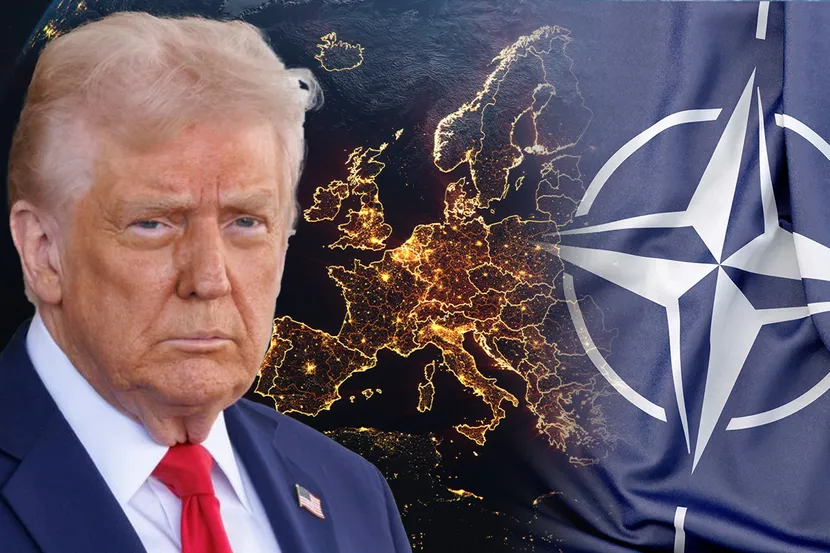
Former U.S. President Donald Trump has issued his strongest warning yet about a potential U.S. withdrawal from NATO, sparking global concern and raising serious questions about the future of the Western alliance.
Growing tensions between the US and allies
Tensions between Washington and European allies have sharply escalated amid disagreements over the ongoing conflict with Iran.
CITAJTE I OVO:
Several NATO members refused to support U.S. military actions, denying access to bases and airspace. This triggered frustration from Trump, who accused allies of failing to stand by the United States during a critical moment.
Trump went even further, reportedly calling NATO a “paper tiger” and suggesting that leaving the alliance is now under serious consideration.
Trump: NATO exit “beyond reconsideration”
In recent statements, Trump indicated that a U.S. withdrawal from NATO is no longer just rhetoric.
He emphasized that the alliance failed to support American efforts, especially during the Iran conflict, and suggested that the U.S. should rethink its role in global defense commitments.
This marks one of the most dramatic escalations in U.S.-Europe relations in decades.
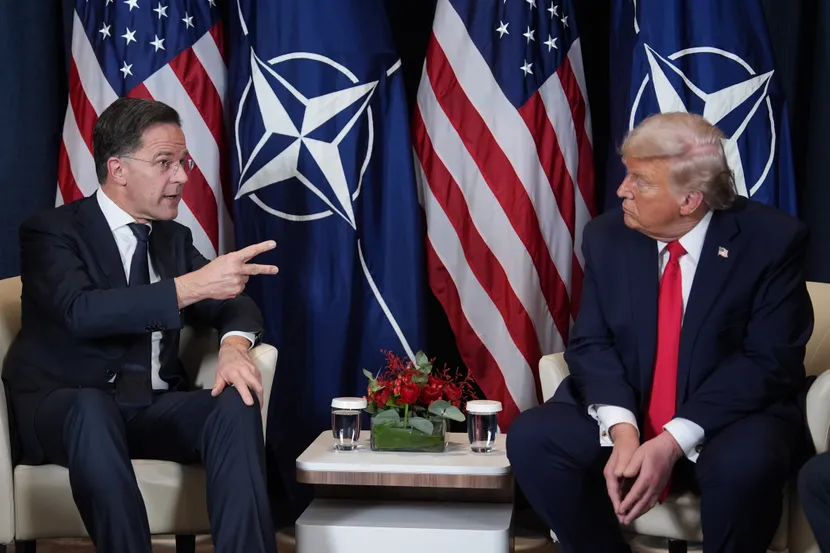
Is it even possible for the US to leave NATO?
Despite the political rhetoric, leaving NATO is not simple.
Under U.S. law, a president cannot unilaterally withdraw from NATO without approval from Congress, specifically a two-thirds majority in the Senate or new legislation.
However, legal experts note that there is still debate over presidential powers in foreign policy, meaning the situation could become a major constitutional battle.
Why this matters globally
NATO has been the backbone of Western security since 1949, based on the principle of collective defense.
Any move by the United States to leave would have massive consequences:
- Weakening of Western military unity
- Increased geopolitical instability
- Strengthening of rival powers like Russia and China
- Major shifts in global security strategy
Analysts warn that such a decision could reshape international relations for decades.
A turning point for the alliance?
Trump’s statements come amid a broader pattern of strained relations with allies, including disputes over defense spending and global conflicts.
Experts believe that even the threat of a U.S. exit is enough to destabilize NATO internally and force European countries to rethink their security strategies.